Point-of-View vs.Taking Sides
Documentary Notebook is a weekly newsletter for people interested in the state of the genre, people behind the camera, and the process of making documentaries.
Fell a week behind as family activities took over.
But this story from last week’s New York Times caught my eye. Here’s the dek, as it’s called in the newspaper business — the teaser graf just below the headline.
Matthew Taylor, a conceptual artist and political strategist, made influential ads and documentaries produced by Steve Bannon. Now he’s assisting the White House.
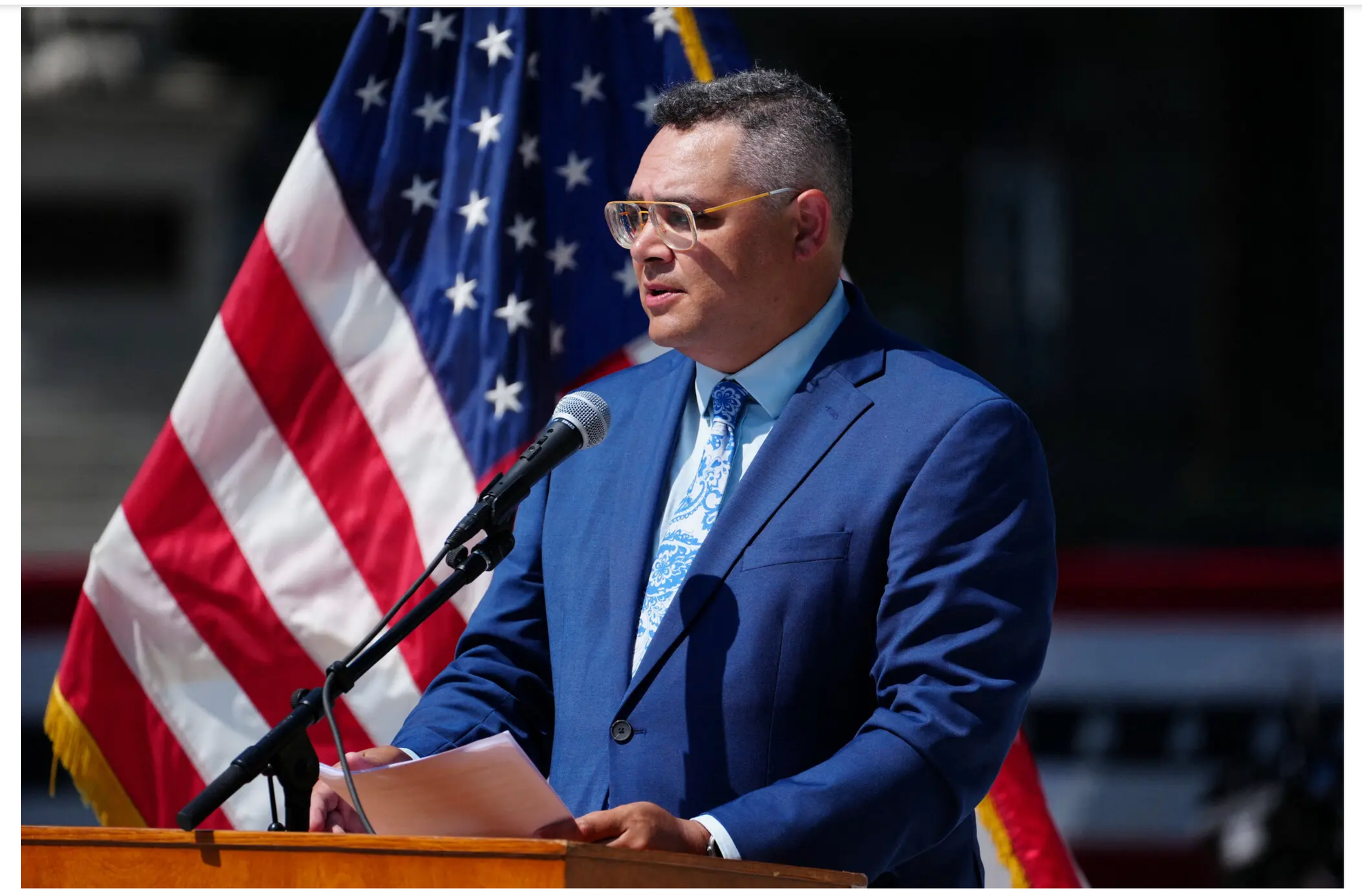
A lot of things to get my head around, as we used to say.
Here's a gift link to the story.
First off, there’s Bannon and documentaries.
I wrote a recent newsletter about how Bannon justified extensive appearances in the Epstein Files, saying he was seeing Epstein regularly because he was producing a documentary about him!
A clever workaround to avoid being implicated in that scandal.
Now there’s a guy who most of us have never heard of who worked for Bannon — an artist/political operative/ad man/documentarian.
Oh, and Taylor is, “a senior adviser at the National Endowment for the Humanities.” Right.
I once landed an NEH grant (in the good old days) that among other things, launched my first documentary film. So, I know a bit about that institution.
Someone who’s a “senior advisor” either vets grantees for non-humanities concerns (read politics) or invites submissions. A gatekeeper.
I’m quite allergic to so-called documentaries that should more properly be called "docutainment," as you read about in my last newsletter.
This guy Matthew Taylor wears another (gold embossed) hat:
Mr. Trump appointed Mr. Taylor to the Commission of Fine Arts, a federal agency that reviews government construction in Washington, to rubber-stamp approvals for projects such as the White House ballroom and the world’s tallest triumphal arch.
Got it. So what are this guy’s actual film credits?
(Yes, another listicle.)

IMDB lists these:
Arcadia Sky: Touching the Sky, 2026. A “documentary” with no synopsis or storyline listed.
The Chat (2026), Short Comedy. “… takes a seemingly ordinary moment and turns it into a comedic exploration of human connection and miscommunication.”
Gotham: The Fall and Rise of New York (2023). “Once a failing city that by 1990 had over 2,200 murders and 93,000 violent robberies annually, New York went on to be the revitalized word capital.”
An ode to Rudy Giuliani.
Marcel Duchamp: Art of the Possible (2020). “… shows how Duchamp's ideas changed the public consciousness, and our understanding of aesthetics, art, and culture.” Ed Ruscha, Marina Abramovich, Jeff Koons, and critic Calvin Tompkins all make appearances in that one. So, there’s that.
According to The Times, “He is a Marcel Duchamp devotee…”
Which might explain his approach to political ads, as quoted in the story:
What we do is we communicate with the public that our guy (the proverbial toilet) is art in a way,” he said.
He really said “toilet” about a client?
We sell ideas by reassigning thoughts. We tap into our audiences’ hearts and their minds the exact same way you sell a ready-made. He or she is not a candidate or a cause, but a set of conceptual principles elevated above all to be a pure belief.
Ruh-roh.
And there's Citizens United, of the 2010 Supreme Court decision notoriety.
He then began working with the conservative nonprofit Citizens United while helping Republican candidates on their 2006 midterm campaigns. One of the documentaries he worked on with that group was called "Border War: The Battle Over Illegal Immigration" and was produced by Mr. Bannon.
Mr. Taylor worked on several projects with Mr. Bannon through the 2000s and 2010s, and had a breakout moment as editor of “Hillary: The Movie.” His 2016 directorial follow-up, “Clinton Cash,” was an adaptation of a book that accused the State Department under Mrs. Clinton of giving favors to foreign entities that made payments to the Clinton Foundation and her husband.
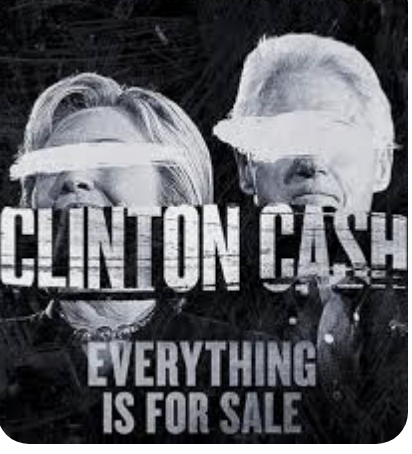
Favors? Presidents? You must be kidding.
And we have a blurb from the world headquarters of arts and culture:
A White House spokesman called Mr. Taylor “a performance artist across many platforms and an avid Duchampian..."
As the John F. Kennedy Center for the Performing Arts looked this year to fill programming gaps created by Mr. Trump's takeover, it turned in part to Mr. Taylor and his documentaries.
(Emphasis mine)
What does Steve Bannon have to say? As quoted in The Times:
"He is an artist first and then he is a conservative,” Mr. Bannon said. “We don’t have enough of those people on our side.”
There’s the rub.
Are good documentaries supposed to take a side? Seems like a couple of “conservatives” believe they do.
My community of filmmakers instead abides by the idea that documentaries can and should have a point-of-view. But there’s a difference between that and taking a side.
Let's be au courant, and ask Claude about the difference between point-of-view and taking sides.
The distinction is mostly about transparency and craft, not about whether bias exists.
Point-of-view documentary
- The filmmaker openly acknowledges their perspective, often through narration, on-screen presence, or framing choices that make clear "this is one person's account."
- It usually still engages with complexity: it may show counterarguments, complicating evidence, or people who disagree, even while arguing for a particular conclusion.
- The persuasion happens through evidence, argument, and honest editing choices — the viewer can see the reasoning and could, in theory, disagree with it.
- Examples: Michael Moore's films, Errol Morris's work, many essay documentaries. The audience knows going in that they're getting a specific lens.
One-sided (advocacy or propagandistic) documentary
- The goal is persuasion by any effective means, not just argument. This can include selective editing that erases context, misleading juxtaposition, cherry-picked experts with no acknowledgment of the wider debate, or emotional manipulation designed to bypass critical thinking rather than support it.
- Counter-evidence isn't engaged with — it's omitted or strawmanned.
- The film often doesn't announce its agenda; it may present itself as neutral reportage while actually being built to lead the viewer to one conclusion.
The practical test people in the field often use:
- Disclosure — does the film let you know it has a perspective, or does it pretend to be objective while pushing one?
- Engagement — does it deal honestly with the strongest version of the opposing view, or does it avoid/distort it?
- Evidentiary standard — are claims sourced and checkable, or does the persuasion rely on editing tricks, music cues, and omission?
A useful rule of thumb: point-of-view work tries to persuade you honestly; one-sided work tries to make you feel like you concluded something it actually engineered. Almost all documentaries have a point of view — total objectivity in editing is arguably impossible — so the real dividing line is whether the film is honest about that fact and about the evidence it's built on.
A battle was waged about this within PBS in the 1980s when right-wingers first started complaining.
Public TV not only endorsed the legitimacy of point-of-view films, it created a documentary series named POV for that very purpose. And it's still on the air.

I suppose Mr. Taylor and Mr. Bannon have been harboring this grudge for a long time. And now, with government being on their side (so to speak) they aren’t shy about turning documentaries in "docu-ganda".
Meanwhile, in related news, this just in courtesy of Huff Post:
“Melania” producer Marc Beckman on Monday said that a new documentary series on first lady Melania Trump is coming this fall, despite the first outing earlier this year grossing $16.6 million worldwide — after costing Amazon MGM a staggering $75 million.
Emphasis mine.
The story goes on to say, with the understatement of the week:
While most Americans are well aware of what happened after his reelection — a staggering accumulation of wealth, the launch of mass deportations and fatal shootings by federal immigration agents — the series will surely focus on less confrontational subject matter.
Ya think?
Comments ()